
An Internal Knowledge System with AI
Do you want colleagues to get quick answers to questions about Products, policy, IT, processes or customers? Then an internal knowledge system with its own chatbot is ideal. Thanks to Retrieval-Augmented Generation (RAG) such a system is smarter than ever: employees ask questions in plain language and the chatbot searches directly in your own documentation. This can be done completely securely, without leaking data to external parties – even if you use large language models from OpenAI or Google.
- Does the answer always match internal reality
- No fabrications are produced (as sometimes with pure LLMs)
- Confidential data is never shared externally
Which tools can you use?
You can set up your own knowledge system with various products, depending on your preferences and requirements for privacy, scalability and ease of use.
Chatbot and RAG frameworks
- LlamaIndex (llamaindex.ai) – Open source, broadly applicable
- Haystack (haystack.deepset.ai) – Strong in enterprise search
- LangChain (langchain.com) – Powerful for integrations and customization
- OpenWebUI (open-webui.github.io) – Simple, modern web interface for chat and administration
Vector databases (for document storage and fast search)
- ChromaDB (trychroma.com)
- Weaviate (weaviate.io)
- Qdrant (qdrant.tech)
AI models
- Large models in the cloud
- Custom models (on-premises or private cloud)
Important:
Many tools, including OpenWebUI and LlamaIndex, can connect both local (on-premises) and cloud models. Your documents and search queries never leave your own infrastructure, unless you want them to!
This is how you easily add documents
Most modern knowledge systems offer a simple upload or synchronization feature.
It works like this, for example:
- Upload your documents (PDF, Word, txt, emails, wiki pages) via the web interface (such as OpenWebUI)
- Automated processing: The tool indexes your document and makes it immediately searchable for the chatbot
- Live updating: Add a new file? It is usually incorporated into answers within seconds or minutes
For advanced users:
Automatic connections to SharePoint, Google Drive, Dropbox, or a file server are feasible with LlamaIndex or Haystack.
Data remains safe and internal
Whether you choose your own models or large cloud models:
- You decide what does and does not leave the premises
- Integration with Single Sign-On and access management is available by default
- Audit trails: who consulted what?
For sensitive information it is advisable to use AI models on-premises or within a private cloud. But even if you deploy GPT-4 or Gemini, you can configure them so your documents are never used as training data or permanently stored by the provider.
Example of a modern setup
With OpenWebUI you can easily build a secure, internal knowledge system where employees can ask questions to specialized chatbots. You can upload documents, organize them by category and have different chatbots act as experts in their own field. Read how here!
1. Add and categorize content
Upload documents
- Log in to OpenWebUI via your browser.
- Go to the section Documents or Knowledge Base.
- Click on Upload and select your files (PDF, Word, text, etc.).
- Tip: When uploading, add a category or tag, such as "HR", "Engineering", "Sales", "Policy", etc.
AdvantageBy categorizing, the right chatbot (expert) can focus on relevant sources and you will always receive an appropriate answer.
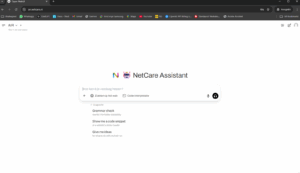
2. Chatbots with their own specializations (roles)
OpenWebUI makes it possible to create multiple chatbots, each with its own specialty or role. Examples:
- HR Bot: Questions about leave, contracts, employment terms.
- IT Support: Help with passwords, applications, hardware.
- PolicyBot: Answers about company policy and compliance.
- SalesCoach: Information about products, pricing and quotes.
Start right away or prefer help?
Want to run a quick proof of concept? With, for example, OpenWebUI and LlamaIndex you often have a demo online in a single afternoon!
Do you want to set it up professionally, connect it to your existing IT, or does it need to be truly secure?
Fortis AI helps at every step: from decision support to implementation, integration and training.
Contact contact for a non-binding consultation or demo.
Fortis AI – Your guide for AI, knowledge and digital security


